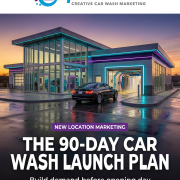
The 90-Day Car Wash Launch Plan: How to Build Demand Before Opening Day
A car wash grand opening should not be the first time local drivers hear your name. By opening day, your market should already recognize your brand, understand where you are located, and have a reason to visit. The strongest new-location launches do not depend on one ribbon cutting, one social post, or one grand-opening offer. They create momentum before the doors open and keep that momentum going after the first week.
That is why every new car wash needs a 90-day marketing plan. A structured launch plan gives operators time to build awareness, prepare key customer touchpoints, test their message, and coordinate advertising, social media, local visibility, and on-site experiences around one clear goal: turning a new location into a familiar local option.
Days 90–61: Build the Foundation
The first stage is preparation. Before promoting the opening, make sure the basics are ready. Customers should be able to find accurate information about the new location when they search. Develop a location page, confirm the business name, address, phone number, hours, and service information, and prepare the visual assets your team will use across channels.
This is also the time to define the launch story. What makes this location worth noticing? Is it a convenient new option for a growing neighborhood, a modern tunnel experience, or a compelling membership value proposition? The story should be simple enough to repeat across paid ads, signage, social posts, local outreach, and customer conversations.
Days 60–31: Build Awareness
As opening day gets closer, shift from preparation to visibility. Introduce the location to the surrounding trade area through social media, local paid advertising, search campaigns, community partnerships, outdoor media, direct mail, or geofenced advertising where appropriate. The goal is not to explain everything at once. It is to create recognition through consistent exposure.
Use content that gives the market a reason to pay attention: behind-the-scenes construction updates, team introductions, coming-soon countdowns, local community features, opening-date announcements, sneak peeks of the wash experience, and early membership information. Your ads, social content, signage, and website should look and sound like the same brand.
Days 30–1: Turn Attention Into Action
The final month is the time to make the next step clear. Test website forms, map links, phone numbers, landing pages, social links, email automations, and any membership or promotional sign-up process. Then coordinate your opening message across channels. Customers need to know where you are, when you open, what they can expect, and why they should visit.
Opening Week and Beyond
Opening day is a milestone, not the finish line. Monitor customer questions, website traffic patterns, social engagement, ad response, membership interest, and local feedback during the first week. Use what you learn to improve quickly. The first 30 days after opening should maintain awareness, turn first-time visitors into repeat customers, highlight customer experiences, reinforce membership value, and make certain the on-site experience matches the promise your marketing made. A successful launch creates more than a busy opening day; it establishes a foundation for long-term recognition, traffic, and loyalty.